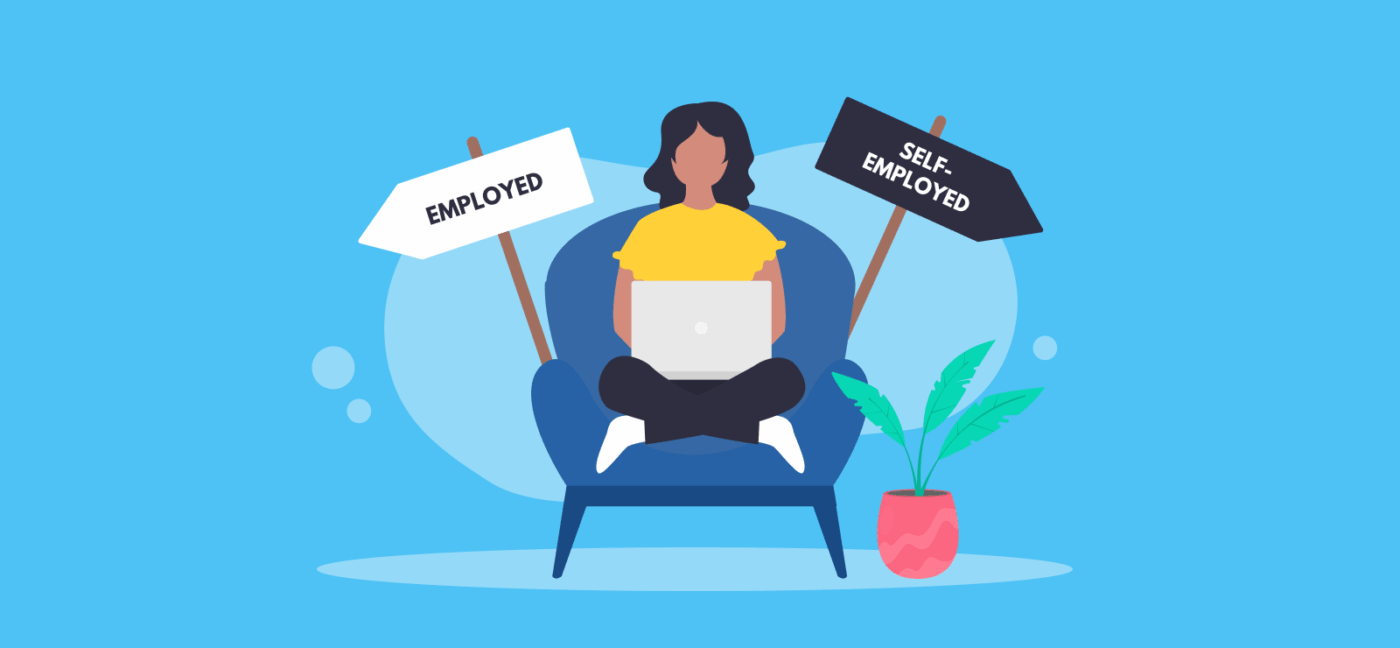
Being your own boss is hard work, but it can also be extremely rewarding. That being said, running a business isn’t for everyone. So, which one is better?
Well, there’s no ‘better’ option in a universal sense. It really depends on the individual, and their circumstances and priorities. Other things need to be factored in too, like the type of industry they’re in, (as some day rates will be a lot higher than others) as well as how successful they’re likely to be as an employee compared to a self-employed person.
But while we can’t give you a definitive answer, we can discuss the pros and cons so you can decipher which option may be best for you.
What is the difference between being employed vs self-employed?
In a nutshell, if you’re an employee, you work for someone else. If you’re self-employed, you’re your own boss. There are huge differences from a tax standpoint. For example, an employee will have their income tax and National insurance deducted from their payslip but self-employed individuals are responsible for their own taxes.
It doesn’t stop there. Being self-employed usually means you can set your own rates and work when you want. An employee will have a set salary, and most likely have less flexibility when it comes to when and where they work, but on the other hand they’ll receive benefits such as pensions contributions and paid annual leave whereas self-employed people won’t. We’ll come back to that point.
What are the pros and cons of being self-employed?
Being self-employed is not easy – and you’ll often find the promise of ‘financial freedom’ all money gurus preach online a little far-fetched. At least at first!
But it does offer you the freedom to work when you choose, as well as giving you access to unlimited earning potential – because you set your rates and decide how many, or how few, projects you’d like to take on.
The way you report and pay tax
We briefly mentioned that employees don’t have to worry about tax calculations because their employers sort everything out through payroll. If you’re self-employed, it’s all on you. You’ll need to submit tax returns to report how much you get, and it’s your responsibility to ensure you pay tax correctly.
Tax is a little different depending on the type of legal business structure you choose, but no pressure! An accountant will help you work out the most tax-efficient option for your business and explain what’s legally required before making your final decision.
You’ll need to keep detailed records of all your transactions (known as bookkeeping) so you can report your self-employed earnings too.
Earning potential
One thing we get asked a lot is ‘will I earn more employed, or self-employed?’ The answer is – it really depends. Sorry, but there really isn’t a clear-cut response! Huge factors come into play, like the industry you’re in, how much you charge, and how many clients or customers you have.
Some people start off freelancing as a side hustle until they get to the point where they have enough clients to leave employment for good. For some people, going self-employed is a no-brainer.
For example
Let’s say you’re an employed hairdresser on minimum wage. You also have a large following on social media for your work and regularly get messages asking if you’d ever branch out to mobile hairdressing. You do some calculations and it looks like going self-employed could allow you to set better rates, and you’d have more freedom to decide your working hours – such as working in the evenings but having weekends off.
You would need to consider travel expenses, as well as equipment and products – but all of these will fall under allowable business expenses.
Benefits and perks
As well as paid annual leave and a workplace pension, some employers offer things like health and dental insurance. Whilst you don’t get this if you’re self-employed, you could be earning enough to put money aside for all of these things. Self-employed individuals can also set up their own pension.
Job stability
To be fair, nothing in life is certain – and that includes any job. Many people will be split on which offers you more protection. On one hand, if you’re self-employed, you’re responsible for finding your own work – with no one above you making decisions that you can’t control.
But on the other, it is much easier for clients to part ways with a freelancer or contractor than it is for an employer and employee. Along with all sorts of employment law protections, employees are entitled to redundancy pay after two years of working at the company. It all depends on how you look at it. If you’re a good networker, you may find working for yourself more reliable.
Mortgage applications
Applying for a mortgage is stressful, and can potentially be even more so if you’re self-employed. Trying to demonstrate you have a reliable source of income so lenders will consider loaning you a load of cash isn’t always straightforward if your earnings tend to fluctuate – which they do for most self-employed people.
At this point you might find having an accountant makes it less complicated. They’ll help you compile your financial records into reports which make sense of what you earn, and forecast how this is likely to look in the future. You can also speak with a mortgage broker who specialises in self-employed mortgages. Don’t be put off though – it is completely possible. Read our guide to applying for a mortgage when you’re self-employed.
Maternity, paternity, and parental leave
As an example, employed individuals are usually entitled to take 39 weeks of maternity pay, and up to 52 weeks of maternity leave if they’ve worked for their employer for at least 26 weeks by the end of their ‘qualifying week’. The ‘qualifying week’ is the 15th week before your child’s due date.
As a self-employed person you might be able to claim Maternity Allowance depending on your National Insurance contributions, but this won’t happen automatically so you’ll need to apply for it.
Unfortunately, there isn’t any official provision for paternity pay if you’re self-employed. It means there’s even more pressure to save money, and to be clear to clients about when you expect to be absent.
Work life balance
You’re often told going self-employed means you have the time to pick and choose when you work. Which is true! It offers you more freedom to go to your child’s sports day, meet your friend for lunch, and even go to doctors and dentists’ appointments without having to ask your boss if you can extend your break.
At the same time though – you need to ensure you’re earning enough money to keep everything afloat. It may mean working hours you don’t want to at times, or taking on more work than you’d like.
A lot of self-employed individuals say they never take time off, especially when they are the business – but there’s definitely a balance you can build once you’re up and running. Setting clear working hours for your clients will definitely help you along the way, to ensure their expectations are met.
If you’re employed, you can submit a flexible working request where your boss may allow you to work the same hours but fit them around your busy schedule. You can also request to work from home.
When do I need to declare my self-employment?
This depends on what sort of business structure you set up! You can learn more about choosing a business structure and the deadlines for registering it in our article.
Learn more about our online accounting services for businesses. Call 020 3355 4047 to chat to the team, and get an instant online quote.
Want to learn more?
Subscribe to our newsletter to get accounting tips like this right to your inbox