Online marketplaces make it easier than ever to sell online, with a huge range of products and services you might offer. Occasional online selling to get rid of unwanted clothes is one thing, but if it’s something you intend to do regularly, or at volume, you may well need to declare your extra income to HMRC – and pay tax. We explain who needs to pay tax on their online sales, and how to do this.
Am I an online seller?
If you sell something online then yes, technically you’re an online seller. Ecommerce is a broad term which describes the process of trading goods and services on the internet. There are lots of ways to become an online seller or start an ecommerce business, such as providing services through freelancing platforms, posting content on streaming sites, selling via online marketplaces, or setting up your own ecommerce website.
What is an online marketplace?
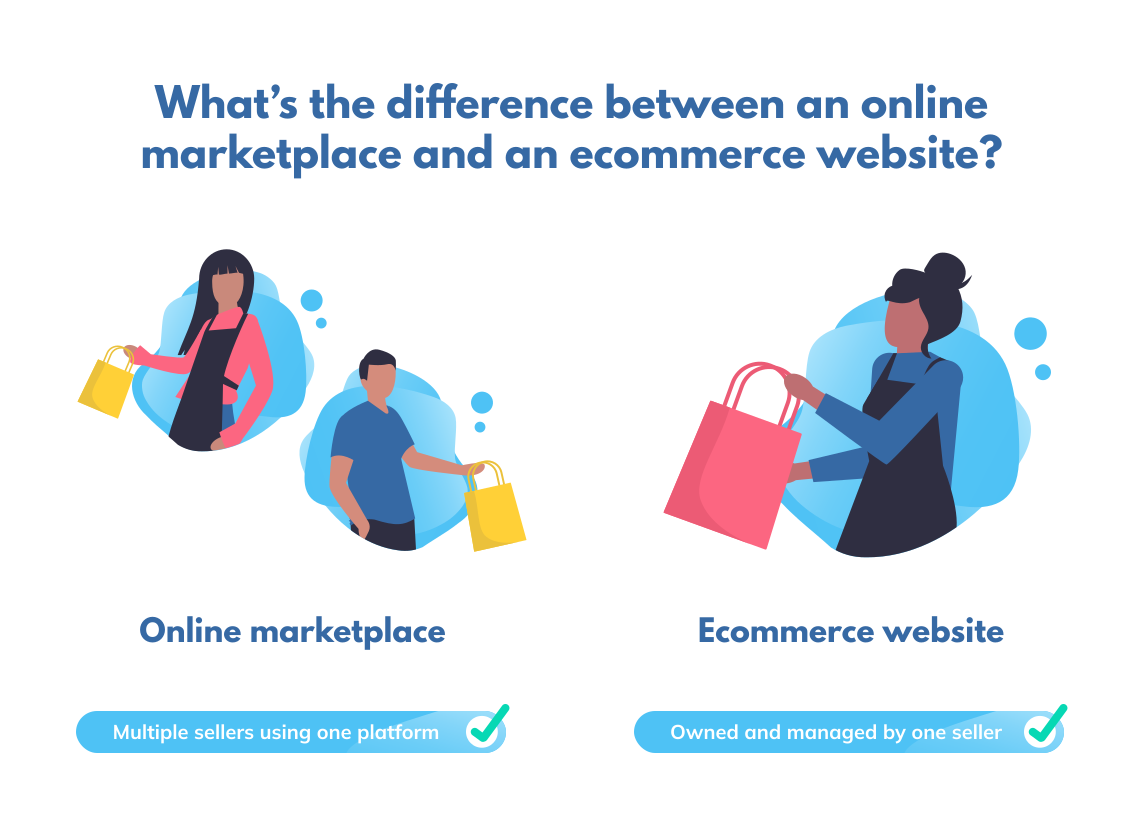
Online marketplaces are just like real-life marketplaces, except they’re online. Think of them as virtual shopping centres, with lots of different brands and retailers all in one place – examples might include Etsy, TikTok Shop, and Amazon. It’s easy for buyers to browse without needing to jump from website to website, and listings will all follow the same format.
You’ll see the term ‘online marketplace’ used by HMRC, and they define it as a business which uses a website or app to deal with the sale of goods to customers and:
- Sets the terms and conditions on how goods are supplied to customers
- Is involved with authorising or facilitating customer payments
- Deals with the ordering or delivery of goods
What’s the difference between an online marketplace and an ecommerce website?
E-commerce websites are slightly different in that they are owned and managed by individual businesses that only sell products and services they choose. Only the people who own the site can create listings, and they have full control over how everything looks and works.
How do I choose which one to use?
It all depends on what it is that you want to sell, and what you’re hoping to achieve.
Online marketplaces typically have a high volume of visitors already. They’re a bit like the online equivalent of a busy market where lots of your potential customers are already shopping. The downside is that there’s also more competition from your fellow stallholders!
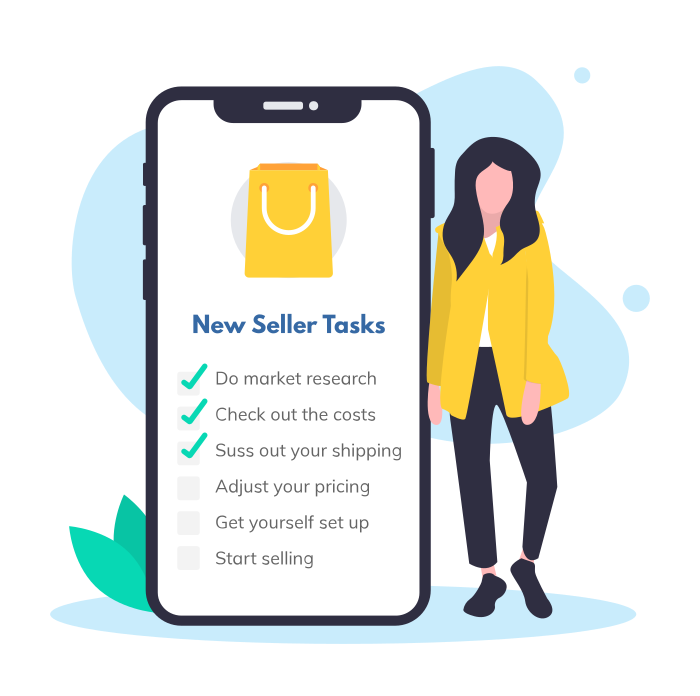
It’s usually quicker to get started selling through an online marketplace than it is to set up your own website, especially if you don’t have much technical knowledge. It also means you don’t have to spend time and money building your own site, and paying for hosting and ongoing management.
Selling through an online marketplace isn’t free, though! You’ll usually surrender some sort of commission on sales, and there might also be fees – even if you don’t make any sales.
Some online marketplaces have a particular focus. For example, selling unwanted clothes taking up space in your wardrobe might be a job for eBay or Vinted, whilst providing personalised wedding favours might be better suited to selling on Etsy.
Do I need to pay tax if I sell online?
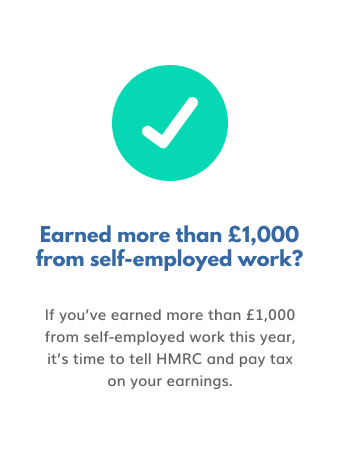
Yes you might need to pay tax on any profit you make from selling online. Thanks to the Trading Allowance you can earn up to £1,000 from self-employment or ‘miscellaneous activities’ such as online selling in a single tax year, and you won’t need to report it to HMRC. The allowance is available even if you have another source of income, such as a full-time job for an employer. Which might be good news if you’re looking to set up that Amazon drop shipping business as a side-hustle!

Will HMRC know if I sell through an online marketplace?
Yes, online marketplaces must collect data about how much you receive from selling online, and report this to HMRC.
It’s really important you tell HMRC about your extra earnings and pay the right amount of tax owed. If not, you could end up needing to pay the tax back later, along with some heavy fines and additional interest. If your income reaches the £1,000 threshold in a tax year, then you will need to register as self-employed and start paying tax.
What about if I sell to a different country?
This is where things can get a little more complicated. For example, if you’re a creator and use Patreon, then this is a US company registered for tax in the United States. As such, they’ll expect you to withhold some of your earnings to pay US tax, but if you’re based in the UK then HMRC will also expect to collect some tax from you – on the same earnings!
Thankfully the UK has double-taxation agreements in place which mean you normally won’t pay tax twice on the same amount of money. In Patreon’s case, you’ll need to complete a W-8BEN form to confirm you’re a UK taxpayer, and you won’t need to pay US taxes.
What taxes do online sellers need to pay?
The type of tax that you need to pay can depend on how you structure your business and can also be affected by how much it makes. For example:
- Sole traders submit Self Assessment tax returns, and pay Income Tax and National Insurance on their profits
- Limited companies submit Company Tax Returns and pay Corporation Tax. You might also need to submit Self Assessment tax returns as an individual to tell HMRC about your personal income.
- Any business structure might need to register for VAT if its taxable turnover is more than £90,000 in any 12-month period. If you’re already VAT registered and start selling through an online marketplace, you’ll need to provide your VAT registration number on your account.
- You might also need to pay tax and VAT if you dropship goods
- Sellers who use an online marketplace or trade outside of the UK (or both) might be subject to import and export VAT, even if they’re not registered for VAT as a business
- There might be special rules if you sell through an online marketplace to a country where you’re not normally resident for tax purposes
How much tax will I pay if I sell online?
This partly depends on the business structure you use, because this has an impact on the tax rate that will be used to work out your tax bill.
That said, all businesses pay tax on the profits they make after deducting expenses, rather than on the full amount of income they receive from sales – so make sure you keep good records! Expenses are normally allowed as long as they’re “wholly and exclusively” for the business, so for someone selling online this could include delivery and packaging charges, transaction fees charged by the platform, and materials used to make the things you sell.
Learn more about our online accounting services for businesses. Call 020 3355 4047 to chat to the team, and get an instant online quote.
Want to learn more?
Subscribe to our newsletter to get accounting tips like this right to your inbox