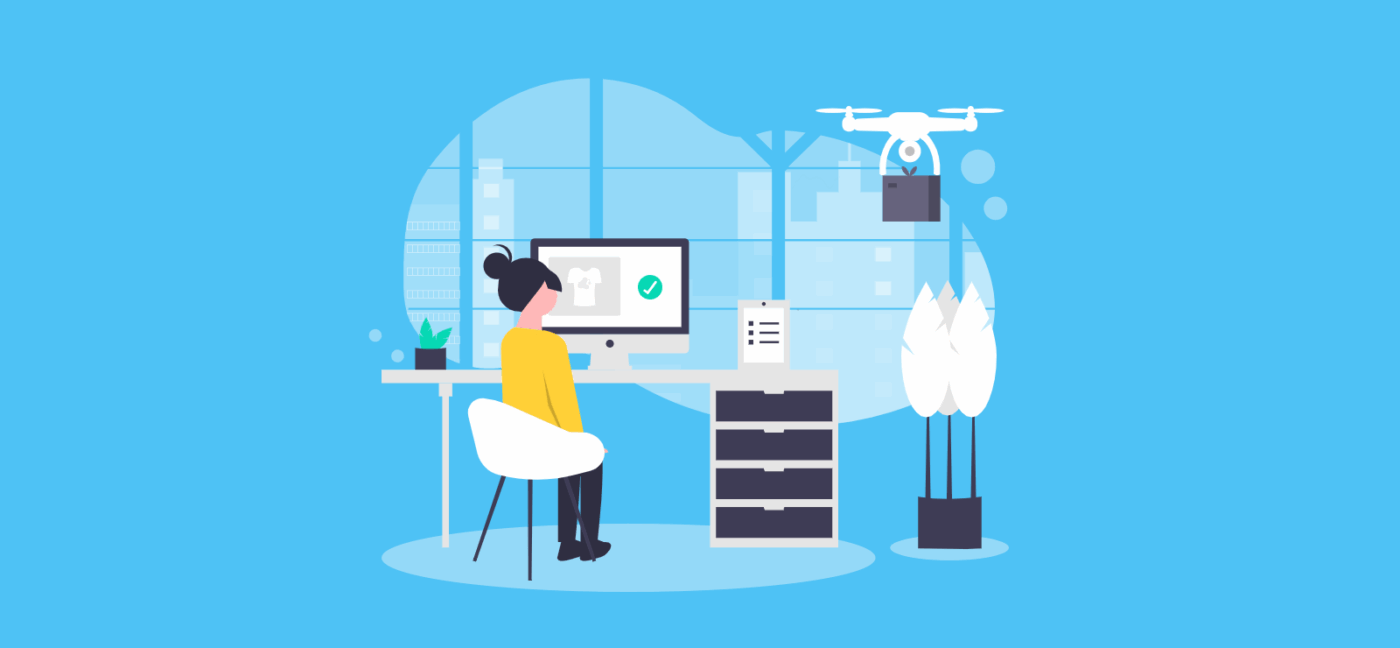
Selling online through your own website or on an ecommerce platform can be a great way to launch a business, or just as a side hustle to earn some extra cash. If you don’t have your own items to sell, dropshipping is just one of the ways you can get started. We explain what tax implications you might need to think about, and how dropshipping works.
**Updated for 2026/27
What is dropshipping?
Dropshipping is a type of retail fulfilment method, which is a complicated way of saying it’s a method of supplying customers with the items they purchase. Rather than keeping items in stock themselves, the seller notifies the manufacturer or supplier each time there’s an order, and the manufacturer/supplier will ship it out to the customer.
- A customer visits a website and buys an item
- The seller who manages the website passes the order and customer delivery details on to the manufacturer or supplier (this is the “dropshipping supplier”)
- The seller pays the dropshipping supplier their fee, and keeps what’s left from the sale price
- The dropshipping supplier prepares the order for delivery and ships it out, fulfilling the order
Dropshipping stores might sell a range of products from different brands, and a variety of dropshipping suppliers will fulfil the orders. You can set up a product listing on your own website, or create an online store using a sales platform like Etsy or Amazon.
What are the pros and cons of dropshipping?
Like everything in the world of business, dropshipping has potentially good and bad points depending on what you need from it, so we’ll look at examples from both sides.
The good stuff about dropshipping
- It’s easy and cheap to get started, and you basically only need a phone and a laptop. You won’t need to buy stock up-front, or worry about storing it (and paying for the cost of doing so).
- You can sell anything you like – the world is your oyster!
- The manufacturer and supplier can use a network of sellers, which widens their market reach. Using a variety of sellers means they’re likely to have a better understanding of a demographic, or local knowledge which will help them make sales.
- It’s often described as passive income, because once you set everything up, it can look after itself – depending on how competitive your sector is!
Potential issues to consider before starting dropshipping
- If your dropshipping supplier messes up, you’ll be the one facing the wrath of your customers. Regardless of who causes the problem, you’re the ‘face’ of the sale, and therefore the one dealing with the fallout.
- It’s an incredibly competitive industry and profit margins can be very low. This can make unforeseen or incremental rises in costs much harder to swallow. It might also mean multiple sellers are trying to make sales with the same products! Hopefully, the brand will put restrictions in place to avoid flooding the marketplace, but this isn’t always the case.
- Suppliers and manufacturers might also insist on particular requirements, such as the way product listings are worded, or restrictions on what else you can offer through your store.
What does dropshipping mean for tax?
Running a dropshipping operation effectively means you’re running a business, so like most other business activities, it has tax implications. For instance, if sales are high then you might need to register for VAT, in which case you’ll need to have a think about what VAT registration means for your sale price.
If you’re earning an income from your dropshipping activities then you’ll most likely need to pay tax on your earnings, at which point you’ll need to choose a business structure (and pay tax accordingly).
Do I need to charge VAT if I dropship from the UK to the EU?
Goods moving across the UK border with the EU are classed as imports or exports. This affects the way you charge and report VAT on cross-border sales.
The tax exemption for low value items you sell to the EU from the UK
As the seller it’s your responsibility to collect the VAT at the Point-of-Sale (POS) if the goods you sell are worth less than €150, and are imported into the EU by a consumer for their own personal use (rather than by a business). The VAT you collect must be reported using the Import One-Stop-Shop (IOSS) – and yes, the world of tax does involve lots of acronyms.
The Import One-Stop-Shop (IOSS)
The aim is to make VAT reporting easier, so the seller or the ‘deemed supplier marketplace’ will register for IOSS in just one EU country. They’ll use that registration to report the VAT they collect on items being imported by an EU consumer, and which have a value less than €150.
Do I have to register for the IOSS?
The big consideration for dropshippers is whether or not you’re responsible for collecting the VAT and reporting it through the IOSS. As of 1st July 2021, this falls to online marketplaces which ‘facilitate’ a sale. The one who facilitates the sale must collect the VAT, and if they collect it, it’s their job to report it.
Learn more about our accountancy services. Talk to one of the team by calling 020 3355 4047, or get an instant online quote.
Want to learn more?
Subscribe to our newsletter to get accounting tips like this right to your inbox