A company’s articles of association are a bit like its official written rulebook, outlining how it should be run and managed. It’s a legal requirement for all private and public companies in the UK to have them when they’re incorporated. ‘Model’ articles are the standard default version of these, and they’ll be applied automatically if the company doesn’t write its own.
You might also hear them referred to as ‘model articles’, or simply just ‘articles’ – all ways of describing the same thing.
What are model articles of association used for?
Every business is different, so articles are a way to standardise and regulate the way companies are governed and operated.
Articles of association are normally used to define the rights and responsibilities of a company’s directors and shareholders (members) so everyone has a clear understanding of what their role entails, and what they’re entitled to as a result.
A company’s articles are a bit like the business’s rule book, so they can also be used to restrict activity. For instance, if shareholders want to minimise the extent to which directors can make business decisions, they can add a clause to the articles. It’s another way of adding security and providing reassurance.
What should be included in a company’s articles of association?
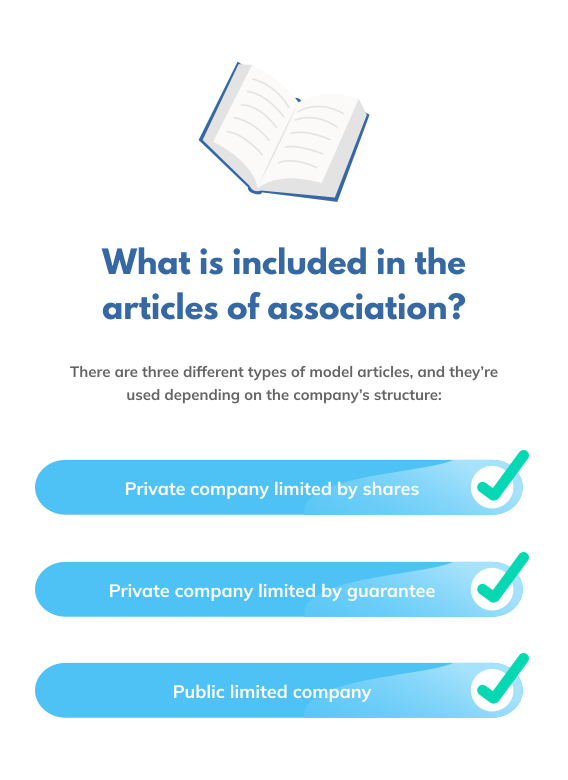
There are three different types of model articles, and they’re used depending on the company’s structure:
- Private company limited by shares
- Private company limited by guarantee
- Public Limited Company
The model articles automatically assigned to companies are standard, foundational articles that work perfectly well in most cases, and particularly where major disputes between directors and members, or structural company changes, are unlikely.
That said, a company can (and should) create its own bespoke model articles of association if there are more complicated factors which need consideration.
What you’ll find in standard model articles of association
- The roles, responsibilities, and power of company directors
- Members’ liability (this means what the shareholders are personally liable for if the company has problems)
- Processes around decision-making, voting, delegation, and conflicts of interest
- Appointment and termination of directors and members
- Processes related to shares and dividends
- Methods of communication
- Information around directors’ indemnity and insurance
- Processes related to company records inspection
- Use of the company seal where relevant
This list is by no means exhaustive though and only summarises the most essential requirements.
Can the articles of association be changed?
Yes, changes can be made to the standard model articles provided by Companies House. In fact, some limited companies choose to create their own bespoke articles tailored to their particular needs. This can be done by tweaking the model articles available from Companies House or by creating them from scratch.
Reviews and amendments
Whether you choose to adopt the standard model articles or construct your own, it’s fairly common for them to need changes over time. Companies evolve and move in different directions all the time, so you may come to a point when reviewing and amending your model articles makes sense.
You might need to adjust existing articles, create new provisions or remove certain parts of the articles to align with the business in its present state.
Voting in changes
If you wish to change your model articles in any way, you should hold a general meeting or express the revisions in writing. The changes won’t be ‘adopted’ until they’re voted in with a majority vote of at least 75% by the company’s shareholders.
Learn more about our online accounting services. Call 020 3355 4047 and get an instant online quote.
Want to learn more?
Subscribe to our newsletter to get accounting tips like this right to your inbox