
It’s not unusual for companies to have a shareholder and director who is the same person, but the two roles do have different responsibilities and requirements. That said, a director doesn’t have to be a shareholder, and shareholders don’t need to be directors. So what’s what?
What does a shareholder do?
Sometimes also referred to as company ‘members’, shareholders quite literally hold a share in the company, representing that they own a percentage of the business. Owning shares usually (but not always) means a shareholder is entitled to receive payments made from the company’s profits known as a dividend.
If they are entitled to receive dividends, the amount they receive depends on how many and what type of shares they own in proportion to the other shareholders (and how much profit the company has available to share out!).
Dividends aren’t taxed at source, so you might need to submit a Self Assessment tax return to report any dividends you receive and pay Dividend Tax on them.

Owning shares can also give shareholders voting rights in the company. Rather than the day-to-day stuff, these votes tend to be about exceptional, big-picture decisions such as:
- Changing the nature of the business
- Issuing shares
- Appointing or removing a director
- Approving directors’ loans
What is a director?
The role of a company director is usually much more hands-on, and they typically spend more time dealing with the day-to-day running of the business. Company directors also have far more responsibilities than shareholders do. It’s their job to manage the company effectively, and to make sure it complies with the law whilst benefitting its shareholders.
Typical responsibilities a director will take care of include:
- Employing and managing staff
- Managing payroll
- Registering for VAT and making MTD VAT submissions
- Submitting the Company Tax Return
- Paying Corporation Tax
- Organising shareholder meetings, and other administrative tasks relating to shareholders
Can directors take a salary?
Yes, directors can pay themselves a salary from the company! In fact it’s very common practice for people who are both a director and a shareholder in the same company to take a tax efficient combination of a lower salary and then dividends to pay themselves. The amount of salary you take to be tax efficient depends on your other income, and who else is involved in the business.
Being a company director also means that you can lend money to or from the company, known as a Director’s Loan. There are tax rules for using your Director’s Loan Account though, so it’s useful to read up on these before making any decisions!
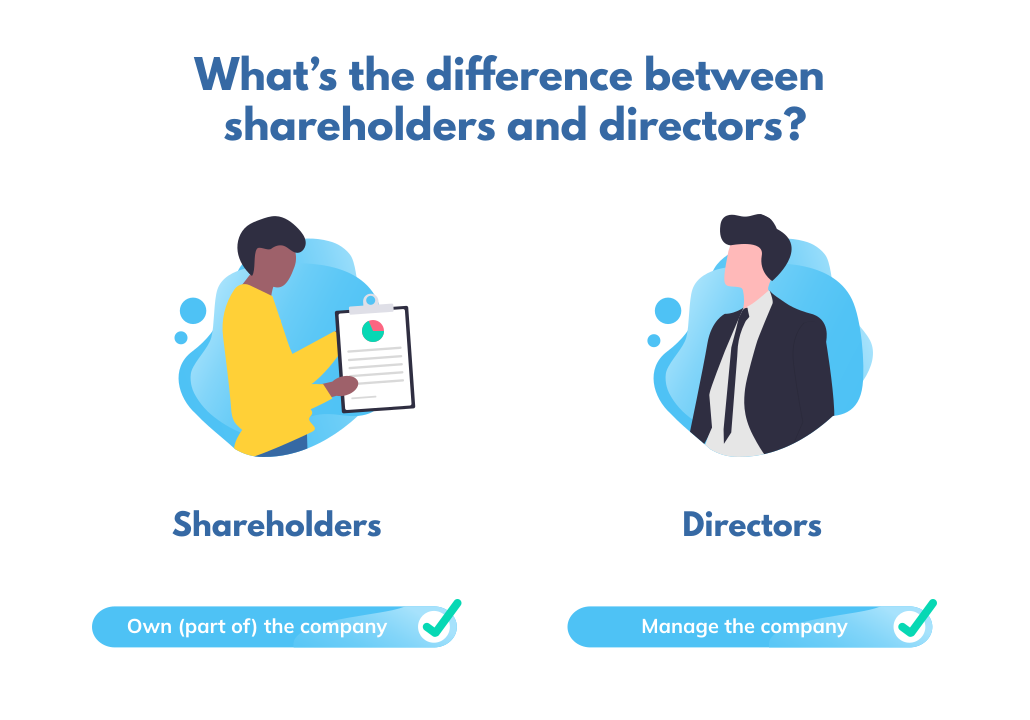
The difference between shareholders and directors
While directors take care of the general day-to-day running of a company, shareholders still have a significant say, especially when it comes to any large decisions about the business. Both shareholders and directors must verify their identity with Companies House, but in simple terms:
- Shareholders own (part of) the company
- Directors manage the company!
Learn more about our online accounting services. Call the team on 020 3355 4047 and get an instant online quote.
Want to learn more?
Subscribe to our newsletter to get accounting tips like this right to your inbox