
Profit and loss reports are a key aspect of running a successful business, so in this article we explain what the terms mean, and how to use them.
What is a profit and loss statement?
A profit and loss statement, sometimes also known as an income statement, is a summary of a business’ sales, minus its expenses. It will usually show the figures over a particular period of time, such as a month or a financial year.
How do I use a profit and loss statement?
Profit and loss statements are a useful way of understanding how a business is performing financially. In essence, they show how much the business has left over once its expenses have been deducted from the money it makes when it trades.
Comparing profit and loss reports from different time periods will also help you spot any trends, and provide insight about areas that need to be addressed or improved. For instance, you might spot that profits are much higher in one month, or that you operate at a loss at certain times of the year.
Having this information helps you to understand what’s really happening in the business, so you can take action as needed.
Spending versus expenditure
It’s useful to note the difference between spending and expenditure, especially when dealing with profit and loss reports. What trips up some people is that a business can incur expenses, without actually having paid the money out of its account yet.
For example, when a supplier submits an invoice, you incur the expense at the date of the invoice – but you might not pay the money to your supplier for another month. When you think about profit and loss, consider all of your expenses, even the ones not yet paid.
It works the other way, too. When the business invoices a customer it’s counted as income even if the customer hasn’t paid it yet, because you can reasonably expect to receive the income.
Cost of sales and expenses
The cost of sales, sometimes also known as the direct costs or costs of goods sold (COGS), are the costs directly linked to a particular sale. For example, the cost of acquiring the raw materials needed to make the product, or the cost of the labour needed to build it.
Expenses are a bit different, and encompass all of the operational costs of the business which don’t directly relate to its sales, such as stationery or renting office space. You might also hear them called indirect costs or overheads.
Gross profit and net profit
When you review your profit and loss report it’s useful to look at the gross and net profit separately. This can help you identify where the business is running efficiently, and where it might need improvement.
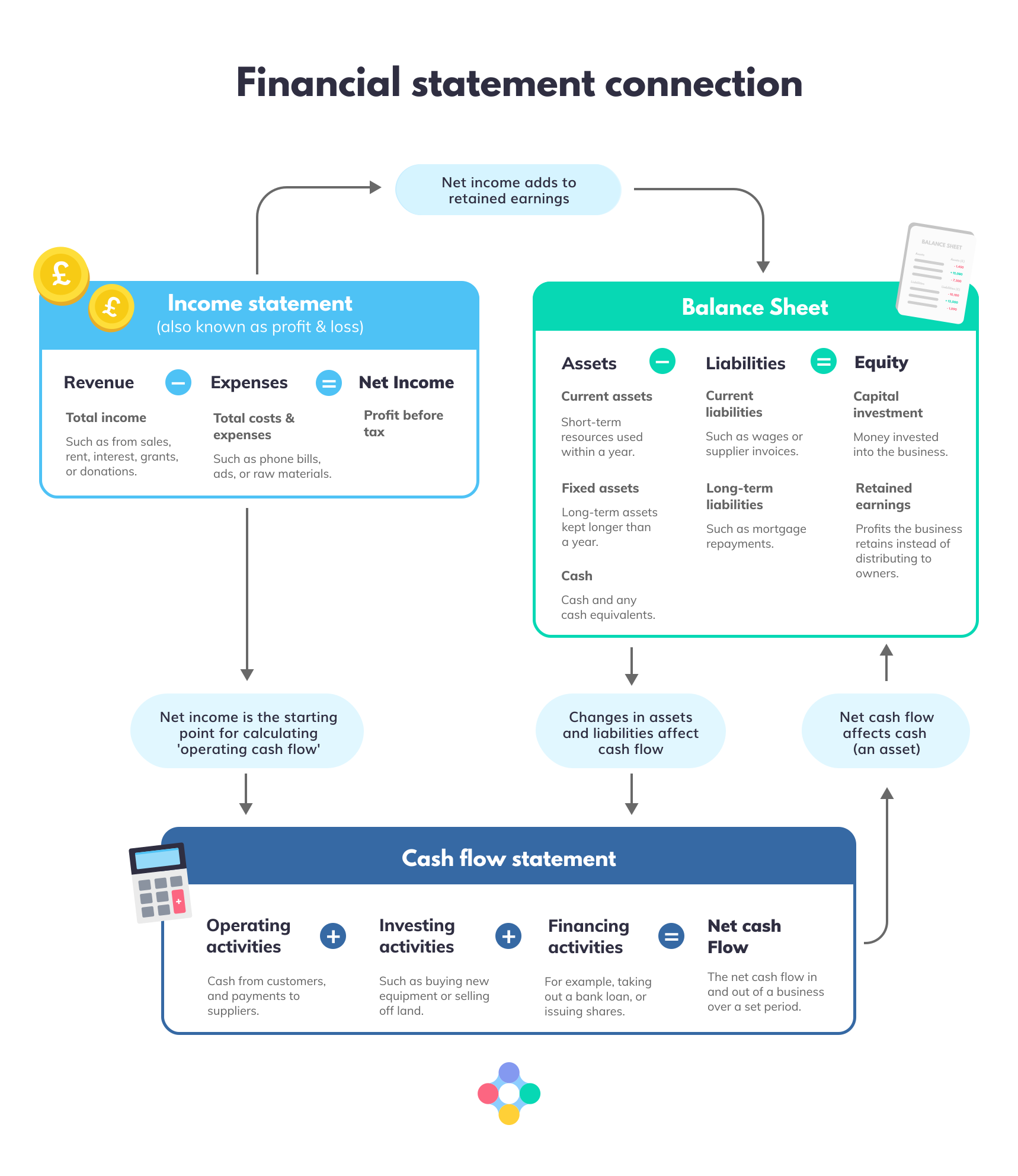
The gross profit is the business’s income, minus the direct cost of sales. Net profit is what’s left over after all of the other expenses have been paid too. The infographic shown below explains how all this information fits together to help you run your business!
How do you calculate profit and loss?
To manually calculate your profit or loss:
- Add up all of your income over a specific time period, to work out your total income
- Add up all of your expenditure over the same time period to work out your total spending
- Subtract your total spending away from your total income. A positive number means you’ve made a profit. A negative number means you’ve made a loss.
Learn more about our online accounting services for businesses. Call 020 3355 4047 to chat to the team, and get an instant online quote.
Want to learn more?
Subscribe to our newsletter to get accounting tips like this right to your inbox