Assets are things your business owns which have or generate value. The value they add to a business means they’re often crucial to the way it functions, and to your accounting.
What kinds of things are considered business assets?
Business assets can be all sorts of things from the cash it has in the bank to buildings it owns, as well as stock, office equipment, and even the brand’s reputation.
Assets are often split into different categories in order to record them in the business’s accounts more accurately, and so that they can be used in different ways – such as working out the value of the business.
How do I categorise my business assets?
There are actually several methods of categorising assets, such as by their type and nature, or based on their physical characteristics. The most common methods are:
- Current and fixed assets
- Tangible and intangible assets
What’s the difference between a current and fixed asset?
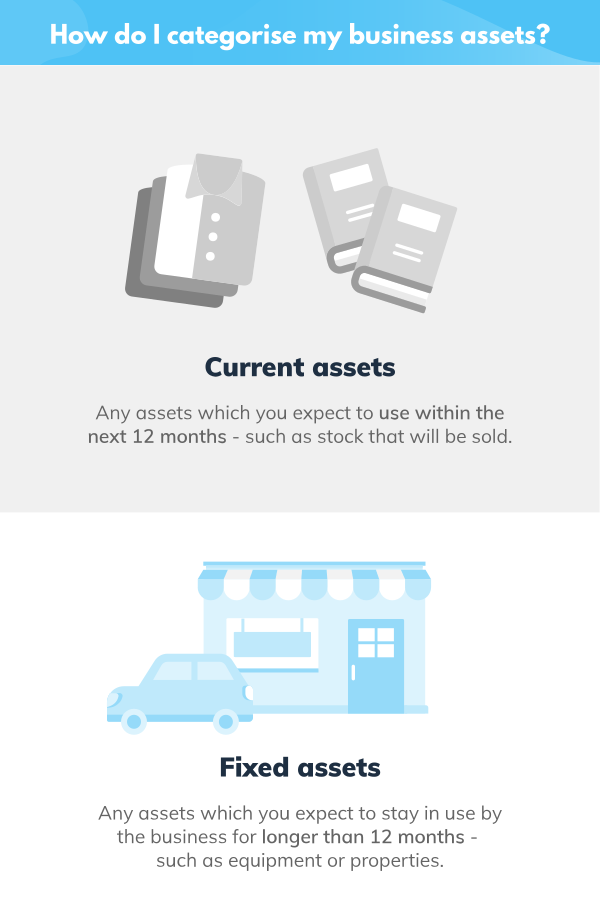
Our table explains the differences between current and fixed assets, along with examples of both.
| Type of Asset | Definition | Example |
| Current Assets | These are assets which you expect to use within the next 12 months. | The stock you sell to customers. |
| Fixed Assets | Assets which you expect to stay in use by the business for longer than 12 months. | Equipment, property, and machinery |
What are tangible and intangible assets?
Intangible assets don’t have a physical “touchable” presence but they still have value to the business. For example, your brand and reputation can help your business attract and retain customers. Any patents, copyrights, or licences that the business owns also have value.
Tangible assets are things that you can physically touch or measure, such as:
- Business premises, property, or land
- Stored stock
- Vehicles
- Cash and cash equivalents
- Machinery and equipment
- The value of any confirmed orders
- Any unpaid invoices that your customers still owe to you
Why should I record my business assets?
It would be extremely difficult, or even impossible, to run your business without the assets it owns, and they represent a large amount of its worth. You can use this information in lots of different ways:
- To help you work out the value of your business as a whole
- When pricing up an asset if you decide to sell it
- As collateral to guarantee a loan
- To claim tax relief such as Capital Allowances
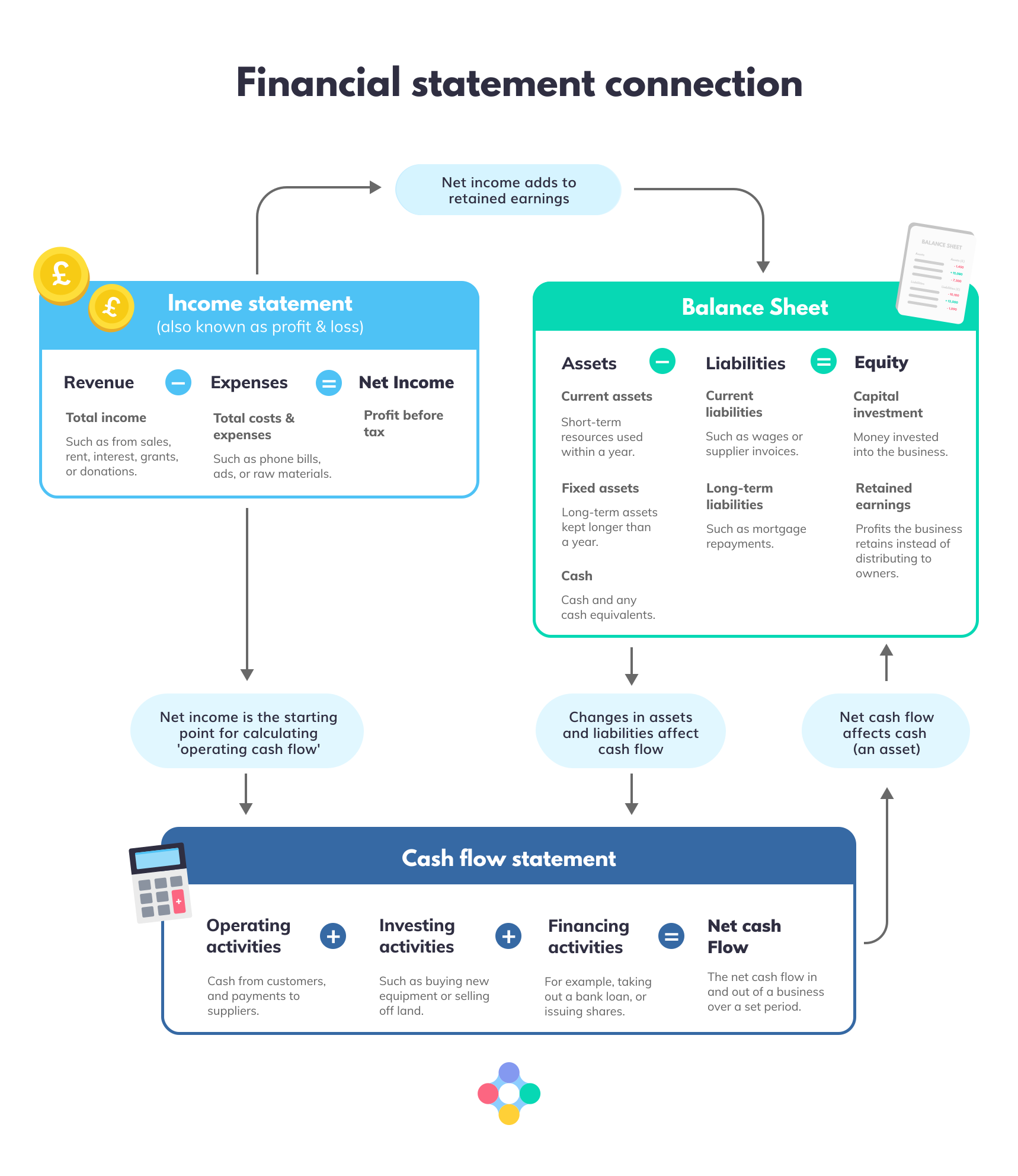
The diagram below shows how recording your assets translates into other parts of your financial reporting.
How do I account for business assets?
For accounting purposes, your assets should normally be recorded on your balance sheet.
This is useful because some assets – especially machinery and equipment – decrease in value as time goes on. This change in value can be measured using an accounting technique called depreciation, and reflected in your records.
Using an efficient asset and inventory management system will also help you track your assets in terms of their quantity and condition, which can help you manage their use and insure their proper value.
Who owns a company’s assets?
This bit is particularly worth bearing in mind. As a sole trader you are your business, so you own everything within it. It’s a bit different for limited companies because they’re a separate entity to their owners.
Even if you’re the only shareholder, you don’t own your company’s assets. The company is its own separate entity, so ‘it’ owns the assets, not you.
What about assets I buy for my limited company?
If you buy any assets for your company using your own personal money (which is common, especially when a business is very new) then you’ll need to transfer ownership to the company.
How do I know the value of an asset I’m transferring to my company?
If you do transfer assets to the company, you’ll need to be very clear about the asset’s current market value, bearing in mind its condition, age, and other factors. Update your records once the transfer takes place, and keep any original receipts as supporting evidence.
What happens to assets if I decide to wind up my company?
What happens to a company’s assets if you close it depends on both how you close your limited company, and whether or not it’s still solvent (can afford to pay its bills).
If the company is insolvent, then any assets that it owns will be sold to pay off as many creditors as possible.
When a company is solvent you can close it by either:
- Having the company struck off at Companies House, known as dissolution. Assets that aren’t disposed of before applying for dissolution may then become property of the Crown. This is what’s referred to as ‘bona vacantia.’
- Members’ Voluntary Liquidation (MVL). If you liquidate the company voluntarily, any assets left over once all the bills are paid are sold off for the benefit of the shareholders.
If you are thinking of buying back any assets from your business yourself, you’ll need to consider the tax implications.
Learn more about our online accounting services for businesses. Call 020 3355 4047 to chat to the team, and get an instant online quote.
Want to learn more?
Subscribe to our newsletter to get accounting tips like this right to your inbox